
The Internet Critic 002
On "Rock Music," BRAT, The Moment, Evolution, The Death of the Dance Floor, House Shows, and the Rebirth of Charli XCX

If Electronic Music is Pop Music, and Pop Music is Rock Music, then by the transitive property, Electronic Music must also be Rock Music.
The BRAT Summer is over. We saw its death in the winter, flocking to theaters to see Charli XCX’s mockumentary, The Moment. Within a couple of weeks, XCX returned to the limelight, soundtracking the new Emerald Fennell adaptation, “Wuthering Heights,” ultimately pushing her career to a new height, taking over airwaves, silver screens, social media pages, Super Bowl commercials, even posting a few blogs of her own on Substack. You cannot escape Charli XCX — nor should you particularly want to. She’s charismatic and funny and vulnerable in the face of relentless fame, and even though I wasn’t particularly a fan of The Moment and critics panned “Wuthering Heights,” her music has remained bulletproof through it all. No amount of neon-lime BRAT memes could destroy an album chock-full of “Club Classics.”
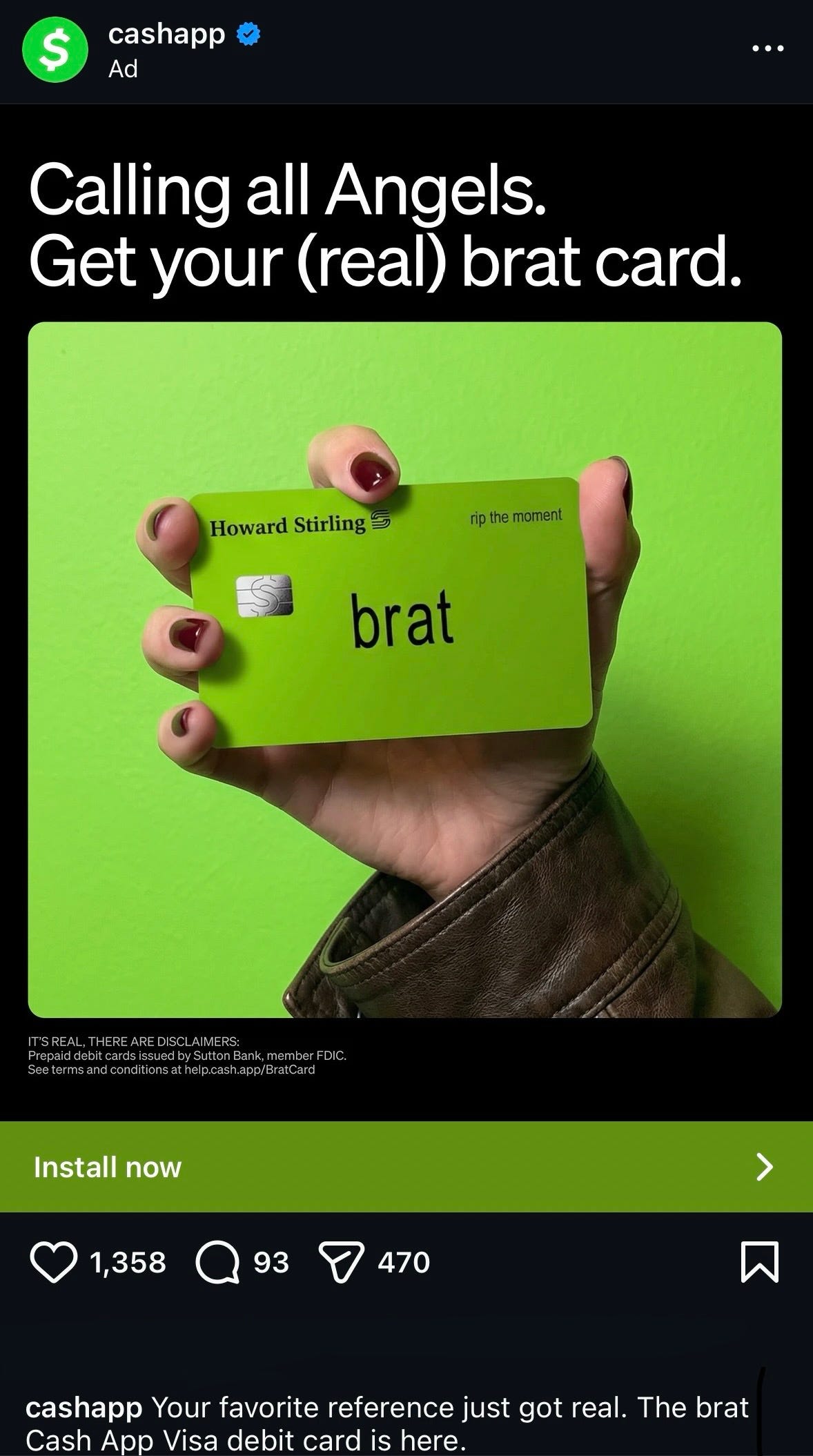
But if you released the defining album of the early 2020s, where do you go from there? Film was a nice detour, but Charli is a musician, and the mockumentary seemed to be paradoxical to where she was in her career — you can’t pretend like you wouldn’t do a deal with a credit card company, taking advantage of your fans’ financial literacy, and then turn around and work with Cash App for a “(real) brat card.” It’s inauthentic; you can’t satirize the hypothetical cake, and then advertise it when it becomes a reality.
BRAT’s dead, The Moment is self-aggrandizing, and “Wuthering Heights” will forever be better on wax than film. So where does Charli XCX go from here?
About a month ago, I watched Charli XCX: Alone Together on Kanopy: a documentary exploring Charli’s pandemic project, how i’m feeling now, where she challenged herself to make an album in six weeks during the COVID-19 pandemic. The result was a hyper pop classic, creating a union between her and her fanbase, lifting the veil and showcasing her creative process, her emotional turmoil, imposter syndrome, self-doubt, and her relationship with her then-boyfriend. She recorded any and everything to be shared with fans, allowing them to be a part of the process, from Zoom listening sessions to Instagram Live Q&As. And unlike 2022’s Crash, which was made for commercial viability and radio play, 2020’s how i’m feeling now was Charli XCX at her most intimate: no-curtains, no-frills, no-in-house producer, no one to impress.
Crash was fine. Some songs were great, but I ultimately agree with what she told The Face in 2024: “There were songs on Crash that I would never listen to.” Front-to-back, how i’m feeling now feels perfect: 11 songs, a smidge over 37 minutes, no bloat, a single feature, and nothing but a direct mirror to what the album title alludes to. Similarly, Crash did what it was supposed to do. It gave her commercial success, leading to her own song on Barbie The Album, “Speed Drive,” to accompany the femme-forward box-office smash.
We could spend ages talking about BRAT and its undisputed impact. I can criticize The Moment all I want, but to be able to even distribute a movie about the making of a record and putting it out in theaters in 2026 less than two years after its release, that record must have been pretty fucking good. And it was. BRAT single-handedly revived Zillenial club culture; it made bumps of cocaine cool again; it was the It Girl Album, contemplating Charli XCX’s life in the spotlight next to Julia Fox and Rachel Senott, exploring contemporary womanhood, the thought of motherhood in the modern era, the various intricacies of female friendship, the power of the Remix, the unity of the Club, and of course, how Electronic Music has become Pop Music. Some songs on Charli’s remix album, Brat and It’s Completely Different but Also Still Brat, are even more popular than the songs on the actual album — I much prefer the “Guess” remix with Billie Eilish, the “Girl, so confusing” remix with Lorde, and the “Sympathy is a knife” remix with Ariana Grande to the originals. BRAT wasn’t just some electronic album; it wasn’t simply the sixth studio album in Charli XCX’s discography; BRAT became an encapsulation of what it was like to be alive in 2024 — constantly recreating yourself, evolving, gassing yourself up, arguing and making up with your friends, drunk, sober, self-aware, contemplative, happy, sad, parasocial, screaming into the void, dancing on TikTok, collaborating with friends and peers, working through your problems in real time, taking a backstage pass to celebrity culture, and ultimately, what it means to be alive at 31 years, old a quarter of the way through the 21st century, made accessible to every 20-something, every teenager, and practically anyone who walked outside for at least the next two years following its release.
BRAT lives. So, The Moment had to kill the era. Charli XCX had to move on. Working with Emerald Fennell on a critical flop helped her evade the press, but at some point you need to hop back onto the wagon. Relevancy is always at risk. And what’s safer than Rock Music?
Well, not “Rock Music.”
The dance floor has been getting killed by splice slop and smoking patios and hyper-pop that you can’t dance to and influencers-that-want-to-DJ-but-don’t-know-how. The dance floor isn’t dead per se, but it is dying, and in Oliver Wang’s book, Legions of Boom: Filipino American Mobile DJ Crews in the San Francisco Bay Area, I remember him writing about how an inability to keep your audience in front of you (thanks in part to smoking patios) has made it far more difficult for DJs to build a setlist that has its own sweaty climax, made effective through its gradual build with captivated dancers.
As of July 1, 2007, a Smoking Ban was implemented throughout the UK, where clubs and bars could no longer allow attendees to smoke indoors, otherwise they would be subject to fines and penalties. This was a significant blow to the dance floor, ushering in a new era for British music. Within 5 years, the third wave of the British Invasion would descend upon America, and electronic music was bundled into rock music (that was spiritually pop music). The British Invasion, but more so the European Invasion, made rock music and its culture the defining sound around the world — Calvin Harris and David Guetta and Tiësto and Mark Ronson and Major Lazer were DJs in a dying era, and their sound was commercial pop, made for come-and-go dance floors, where you rush to hear the song of theirs you love, and leave for a smoke break once its over. No longer were we living in the times of Basement Jaxx and Goldfrapp and Moloko and Groove Armada; eyes were shifting to indie sleaze, and bodies were migrating to spaces outside of the club.
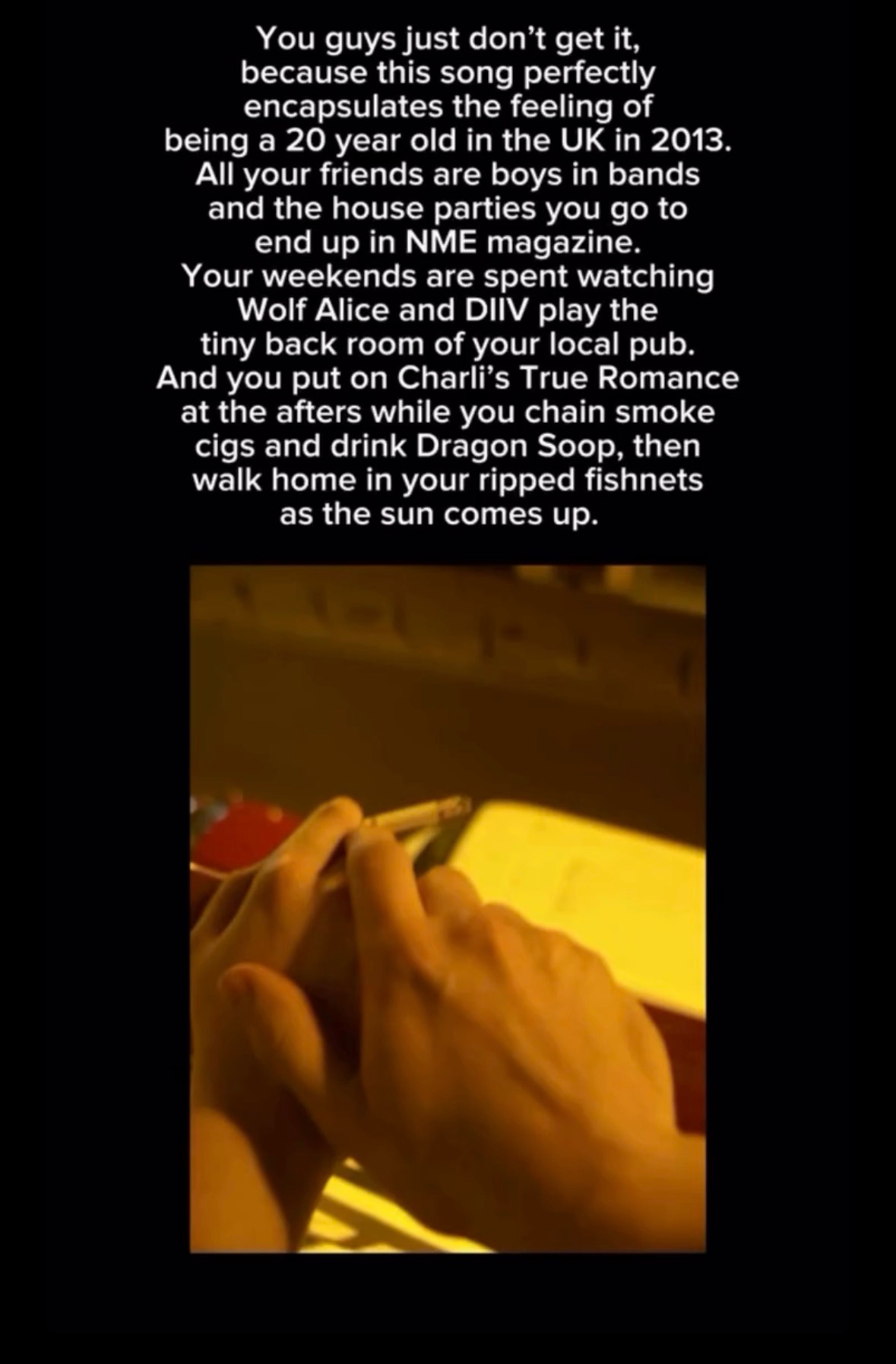
“Rock Music” is post-LCD Soundsystem & The 1975. In an Instagram story on Charli XCX’s Instagram page after the song’s release, she [probably not Charli] writes about being 20 years old in the UK during 2013, hopping into house shows that’d inevitably make their way into NME Magazine. Everyone knows a boy in a band; it seems like everyone is listening to DIIV and Wolf Alice, and you’d chain smoke cigarettes in the back patio of pubs, ingesting cheap beer and indie rock from 20-somethings that want to Invade the Americas. You’re listening to “All My Friends” by LCD Soundsystem & the 1975 just dropped their debut album, and “all we seem to do is talk about sex.”
Music is fun, the dance floor is dead, and instead of passing around a baggie, it’s pint glasses and menthol cigarettes, and you’re not wearing earplugs because the music’s too loud — you want to feel the bass vibrate through body until you feel like you want to puke. You’re getting tinnitus, but no one gives a fuck because you’re moshing with your friends by your side, getting drunk and delirious and any problems that arise are a future problem, not now, when you’re too busy enjoying the moment. An injury was a story; the ringing in your ear is a side effect of a life lived.
The beginning of “Rock Music” sounds fuzzy, like it’s a crackling snippet from “Sex” by The 1975, buzzing with texture and newfound life, in the rhythm of the keys from “All My Friends.” I can’t unhear it, and I don’t know if it’s an actual sample or just a coincidence, but I know for a fact that it reminds me of my own teenage years: all the fun, the havoc, “me and my friends” going out and feeling like the world was ours.
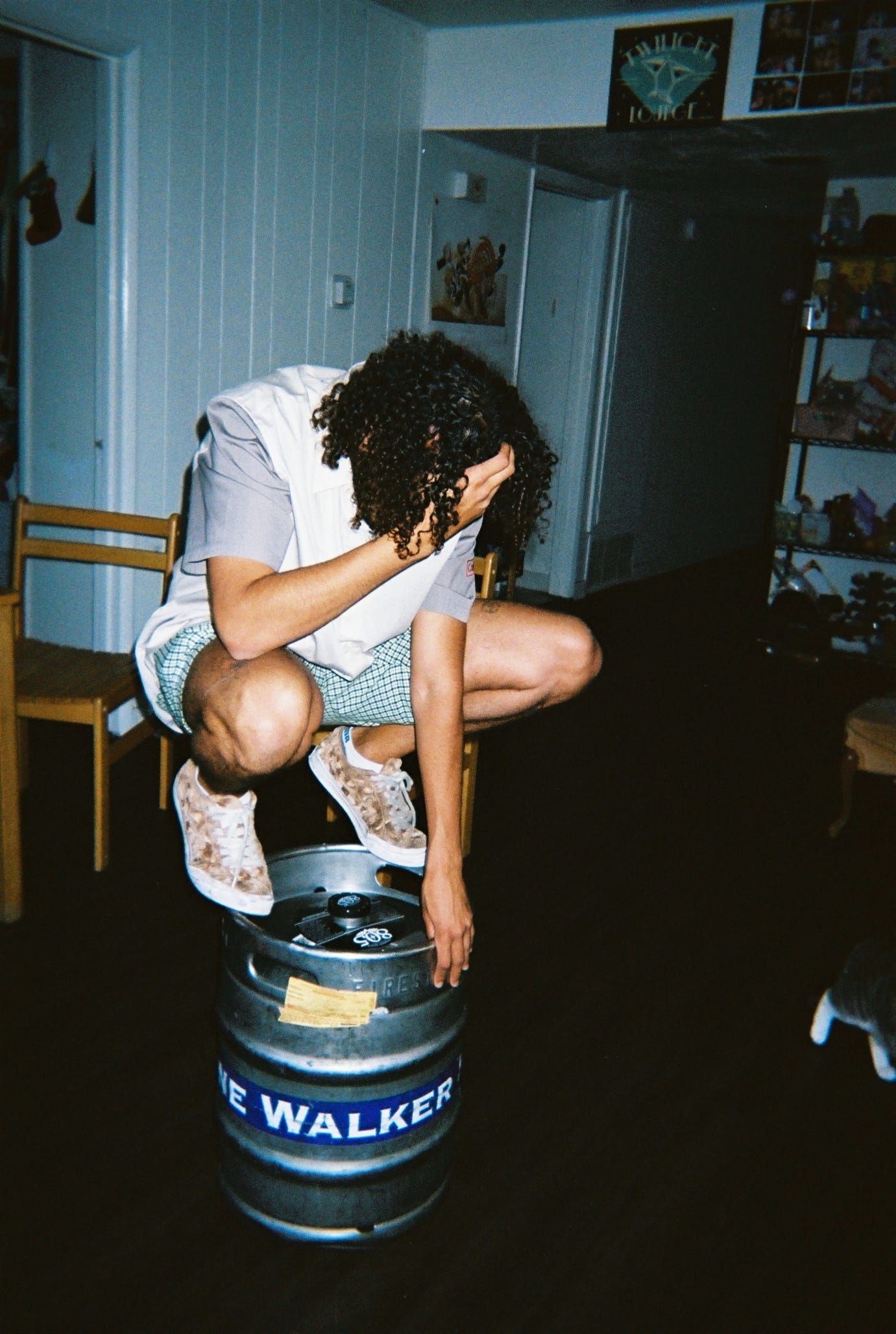
The dance floor was dead. I hated going to the club. I couldn’t stand the DJs playing throwbacks, spinning the same songs nightly, as if the early-2010s was the apex of pop music. LMFAO. “Party in the USA.” Believe by Justin Bieber. Maroon 5. The club was in a state of homogeneity, while backyard shows had this effervescent quality where chaos was on the corner and anything was possible. At that point, it wasn’t even about the music; you came to a house show to be surrounded by people that love to talk shop about their favorite bands, who the artists on stage remind them of, kegs of beer, red Solo cups, guys and girls in tattered clothes moshing as if their lives depended on it, power chords that felt as if they were thunderous raptures coming directly from God, the legendary stage dives, the even-more-legendary plummet into the crowd when no one catches you, the head banging, the freedom, the memories.
So Rock is Pop and Pop is Electronic and Electronic is Pop and Pop is Rock.
“So, now we’re making Rock Music.”
Genre’s just a construct anyway. As the guitar glitches and the bass crunches and the beat fizzles with life, everything dissipates and you return to that house show in 2013. BRAT is dead and “Rock Music” feels inspired. Nostalgia’s in the air and it smells like cigarettes. Don’t think too much. Let’s enjoy the moment, shall we.